№ 01 — SOFTWARE HOUSE
Scope it once. Get it signed. Keep the trail. Every engagement, by design.
A software house lives and dies by the trail it can produce later: what was actually agreed, who approved the work, why the architecture went the way it did, and where the retainer hours went. When that trail lives in scattered emails, a verbal "yes, ship it", and a whiteboard nobody photographed, every dispute becomes a word against word. Navigare Software House gives each engagement a statement of work, lets clients sign off deliverables through a magic-link portal without ever logging in, records the architecture decisions that matter, and burns retainer hours down in plain sight — so the record exists before you need it.
The engagement records vanish the week a client disputes scope: how many sign-offs, change requests and recorded hours could you produce as evidence?
THE PROBLEM
The work happened. The record didn't.
Most studios deliver good work and still end up in awkward conversations — not because the work was wrong, but because nobody can point to what was agreed, who approved it, or why a decision was made. The risk below is the kind that stays invisible while a project runs smoothly, and surfaces the moment a client queries an invoice, a scope, or a six-month-old technical choice.
i
Scope creep with nothing to point at
Without a written statement of work tied to the engagement, "while you're in there, could you also…" quietly becomes the contract. By the time the bill is queried there is no agreed line between what was scoped and what was extra — only memory, and memory is not billable.
ii
Sign-off lost in an inbox
A client's "yep, looks good" arrives buried in an email thread, a Slack message, or a hallway conversation. When the same client later says the deliverable wasn't approved, there is no single place that records who accepted what, and when — just a search through correspondence.
iii
Architecture decisions never written down
The reasons behind a database choice, an auth model or a third-party dependency live in one engineer's head and a thread nobody can find. Six months on, a new developer reverses a decision that was made deliberately — because the rationale was never recorded.
iv
The retainer burns with no trail
A monthly block of hours quietly empties. Neither side can see how much is left until it's gone, and when the client asks where it went there is no running ledger to show them — only an uncomfortable estimate.
v
Time logged against nothing in particular
Hours get booked to a vague project name, not to a deliverable or an engagement. So when you try to work out whether a piece of work was profitable — or substantiate a retainer's burn — the timesheet can't tell you, because it was never connected to the work it paid for.
vi
Every dispute is word against word
Scope, approval, technical rationale and hours all live in different tools — or no tool at all. When something is challenged, there is no single, dated record to settle it, so the relationship absorbs the cost of an argument that good record-keeping would have closed on the spot.
HOW NAVIGARE SOLVES IT
One system where the agreement is on the record.
Built on Odoo Community with our software-house vertical on top: engagements scoped by a statement of work, deliverables signed off through a magic-link client portal, audit-flagged Architecture Decision Records, retainers with a live hours burn-down, and time tracked against the work it belongs to — in one place, in pounds. The principle is simple: the things you'll need to prove later should be recorded the moment they happen, not reconstructed afterwards.
The principle: a studio earns trust by being able to show its working. What was scoped lives on the engagement, not in an email; a client's approval is captured as a signed event, not a forwarded message; the decisions that shape the system are written down and flagged for audit; and the retainer is a ledger anyone can read. The sections below describe how that works as it actually behaves — not a wish-list.
EVERYTHING THE STUDIO RUNS ON
Scope, decisions, retainers and time, in the same system.
Sign-off is the moment you most need on the record, but a studio runs on more than that. Navigare Software House keeps the scope, the technical history, the retainer ledger and the timesheet alongside it — one system, one record, in pounds.
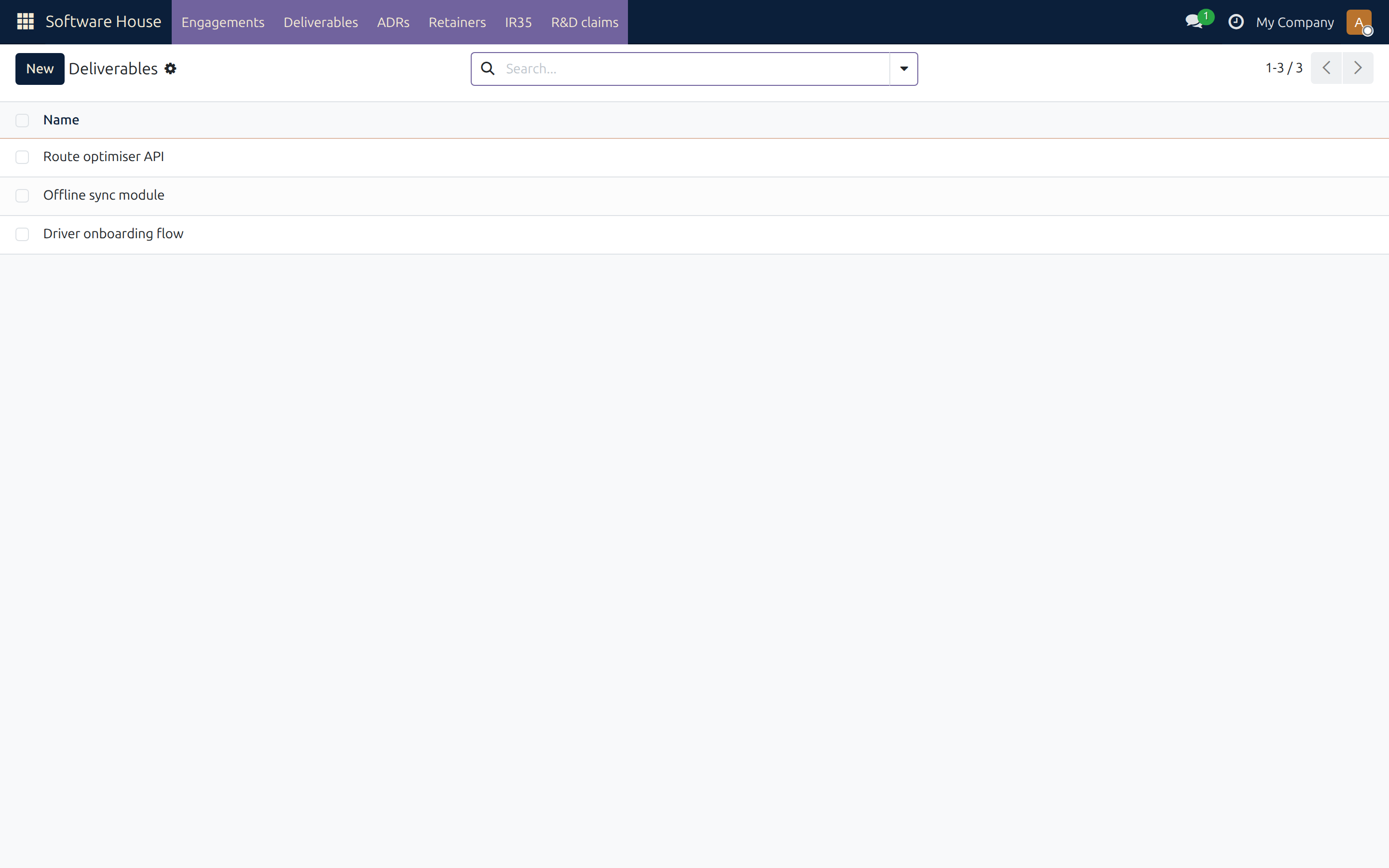
Engagements with a statement of work
Each engagement holds its own statement of work, so what was agreed is written on the record from the start — and scope creep has a line to be measured against.
Architecture Decision Records
The decisions that shape the system — and the reasoning behind them — are recorded as audit-flagged ADRs, so the rationale survives the engineer who made the call.
Retainers with burn-down
A retainer's hours are tracked as they're consumed, with the remaining balance visible to both sides — so nobody is surprised when the block runs low.
Time tracking, tied to the work
Timesheets book against the engagement and the deliverable they belong to, so hours can be reported, billed and reconciled against a retainer's burn — not lost to a vague project name.
Priced in pounds
Billing and invoicing in GBP — built for an English or Welsh studio from the ground up. A restore drill is scheduled on a weekly timer, Sundays 03:30, restoring a real database backup into a throwaway database and verifying it; the result is published, pass or fail, with every date and figure on the proof page. The first drill, started by hand on 24 July 2026, verified 399 tables and about 25,092 rows from a 19.2-hour-old backup in 3.8 seconds.
One system, one record
Engagements, deliverables, ADRs, retainers and time in a single place on Odoo Community — no re-entry between tools, and one place to look when something is queried.
WHO THIS IS NOT FOR
Not for teams past five fee earners, and not if your developers will not leave Jira — the sign-off trail lives here or nowhere.
Backups
02:30 and 03:30
A local database dump every night, and a separate off-site copy every day held with a different provider. Until 24 July 2026 the database only: attachments were not included, and the first backup with documents is the night of 24–25 July 2026.
Replication
Asynchronous
Streaming replication to one standby machine, asynchronous today, with synchronous mode in preparation. Lag alerts at 30 and 120 seconds; the last seconds of committed work may not have reached the standby.
Weekly restore drill
Sundays 03:30
A real database backup restored into a throwaway database and verified — not one drill per customer. Last run 28 July 2026 across 16 databases, passed; two drills published so far. The database only — documents are not drilled yet.
Who answers
One engineer
Krzysztof Moroń, who wrote your package. One working day, by e-mail.
Each Sunday's scheduled drill restores engagement records, change requests and recorded time; uploaded documents are not yet covered, and each result will be published.